
[Thermal insulation]
5 mm full neoprene diving suit.
Waterproof seams GBS with smooth sleeve cuffs.
You can find Gift Cards from our store
Cookie policy
I agree to the processing of my data in accordance with the conditions set out in the policy of Privacy.Cart
Your cart is empty

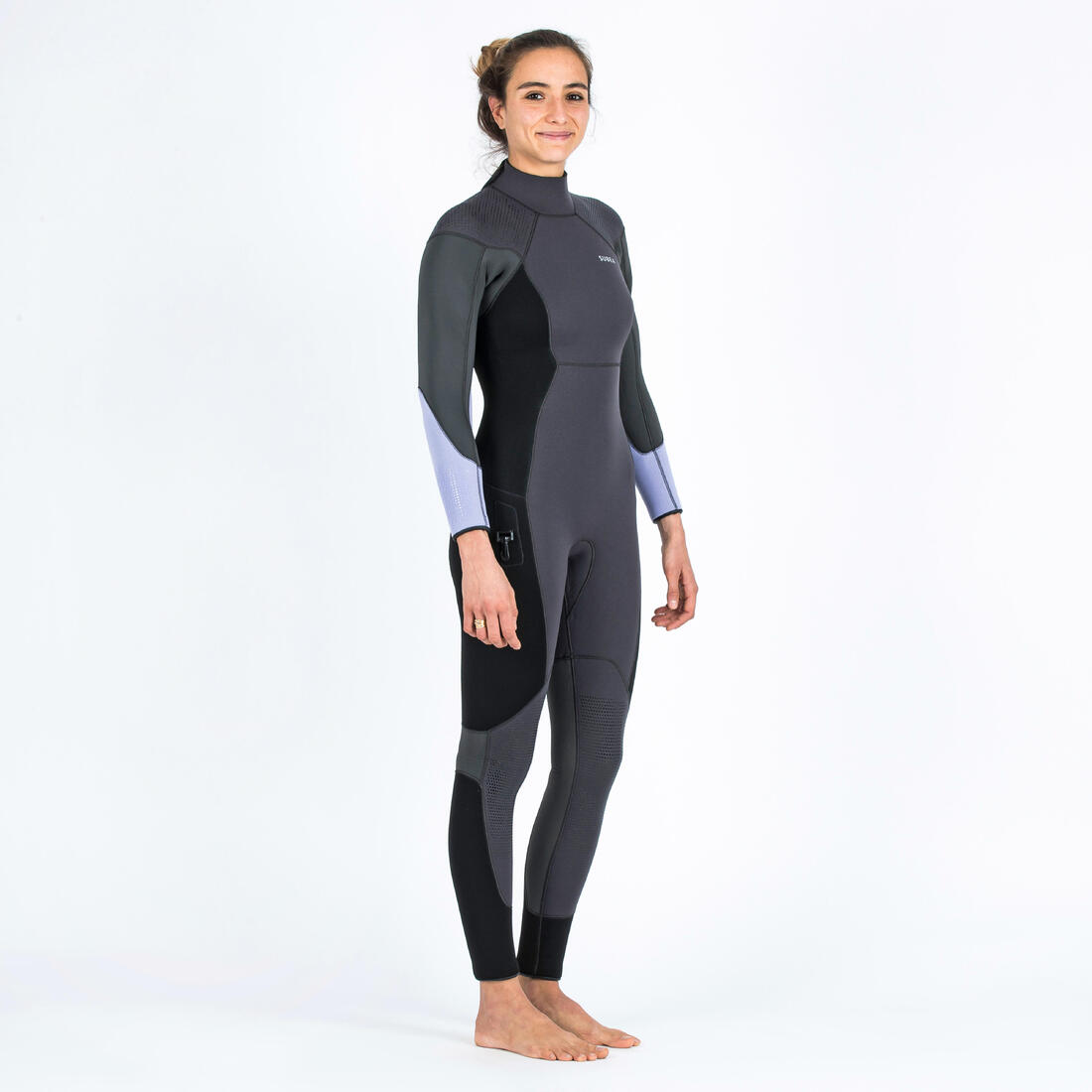




A diving suit for women diving in temperate waters (16°C-24°C). Adapt to all seasons with this soft, comfortable 5 mm neoprene diving suit.
Secure payment
We also offer payment in 2, 3 or 4 installments for purchases of €150 or more.
Secure payment
We also offer payment in 2, 3 or 4 installments for purchases of €150 or more.
exchanges
You have up to 90 days to return your items. More information via this lien.
exchanges
You have up to 90 days to return your items. More information via this lien.
5 mm full neoprene diving suit.
Waterproof seams GBS with smooth sleeve cuffs.
One-piece diving suit with back zip, stretch under arms.
Stretch neoprene, seamless underarms, specially cut for women
Printed reinforcements to reduce wear on the knees, lower back and shoulders.
Description
Neoprene 5 mm one-piece wet-type with back zip. Seams taped using a GBS (glued and blind-stitched) assembly. Once a thin layer of water (that enters through the zip) gets trapped between your body and the diving suit, the water stays warm as it is not replaced. This thin layer of water keeps you warm. Rolled, smooth-edged cuffs, ankles and neck for maximum watertight seal.
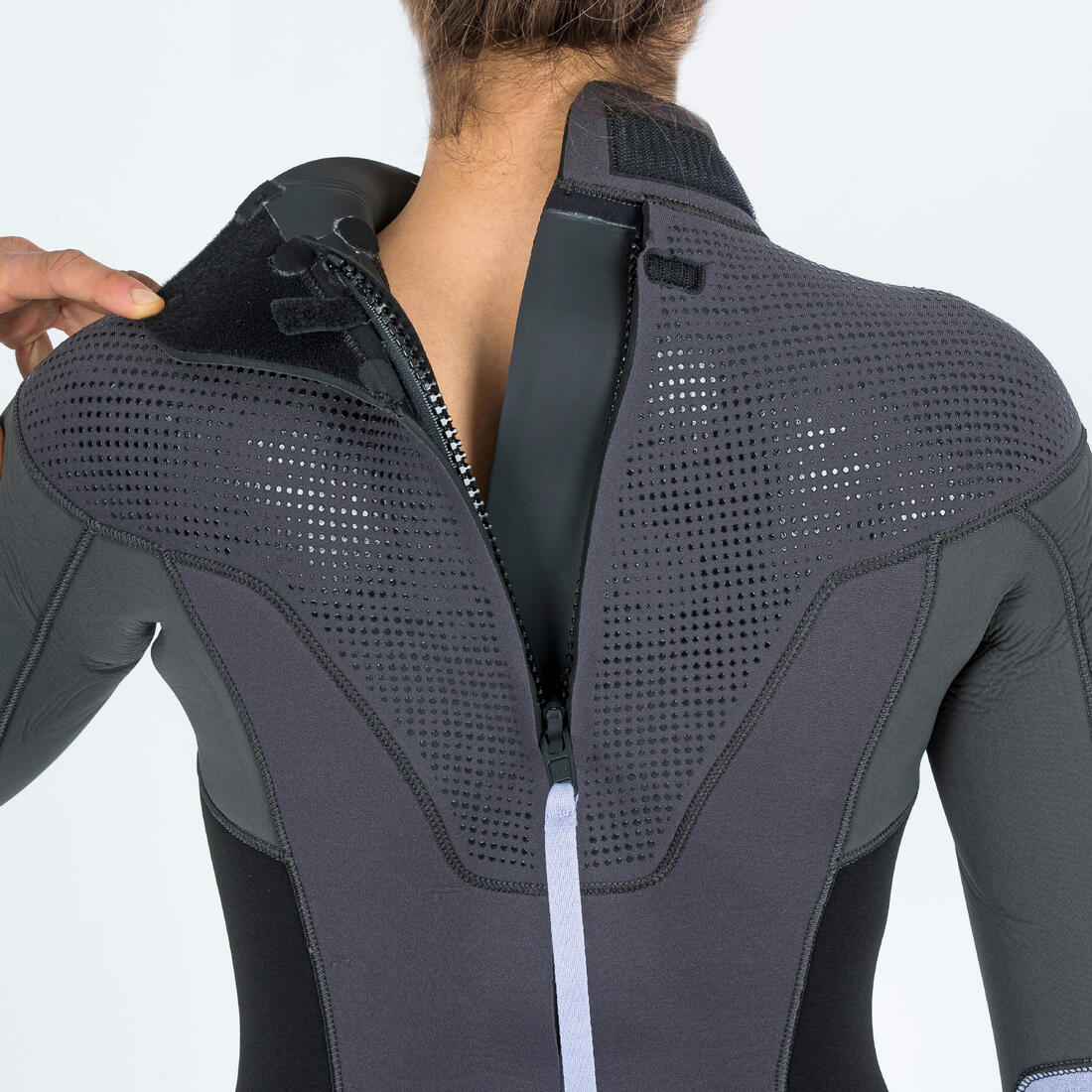
The back zip is designed so that two panels of smooth neoprene overlap to limit the inflow of water. The diving suit's GBS assembly (Glued and Blind-Stitched) means that the seams are waterproof: the neoprene is glued and then stitched for extra durability (the needle does not go all the way through the neoprene to stop water getting through). Snap hook on the upper thigh to attach accessories.
Neoprene diving suits must be skin tight to be effective, that's why SUBEA has developed specific sizing for the female body. The designs and prototypes of these products are tested "by women, for women"!
One-piece with separate hood (not included). Stretch neoprene under the arms and extremity panels (very soft and stretchy neoprene) to adapt to fit different body shapes and suit various physiques. The extremities of the legs and arms are also made of stretch neoprene for easier dressing. No underarm seams for easier arm movements.
The diving suit has printed reinforcements at the knees. There are also prints on the friction zones linked to the buoyancy compensator (shoulders and lower back). Also provides better body support and prevents the vest from slipping on the slides. Wrist protection to prevent the dive computer from turning.
This scuba diving suit provides thermal protection that has been tested by the independent INPP institute (Marseille, France) in order to validate its compliance with the current standard (EN 14225-1:2017). CLASS C certified diving suit: A (+7°C/+12°C / +45°F/+54°F) B (+10°C/+18°C / +50°F/+64°F) C (+16°C/+24°C / +61°F/+75°F) D (+22°C/+30°C / +72°F/+86°F).
When diving, cold is your worst enemy! Using the right thermal protection based on the water temperature, is essential. This concept was created to keep you from having to purchase different diving suits for different diving conditions, with 5 pieces that can be combined with your suit depending on the temperature. In this way, you can complete your thermal insulation with a hood, a neoprene top, a top with a hood, a 1 mm under-shorty or a 5.5 mm over-shorty.
This is the most common type of diving suit on the market. It is not designed to keep the water out, but to trap it, so that your body then warms it up, creating a thermal buffer between you and the outside. Made of neoprene - a rubber polymer filled with air bubbles - these diving suits are available in thicknesses of 0.5 mm to 7 mm. Thanks to their suppleness and modularity, they constitute excellent diving suits.
Put your foot in a plastic bag, then slip your leg into your diving suit. Your entire foot comes out without snagging! To adjust, ask someone to blow into your sleeve from the wrist. The incoming air inflates the interior of the neoprene diving suit, immediately separating it from your skin. You can then easily proceed with the final adjustments.
1) Soak the inside and the outside of the diving suit in clean water after each session. 2) Clean with a bactericide solution. 3) Rinse thoroughly in clean water. 4) Dry on a wide hanger in a dark and well-ventilated place. Caution: the sun will cause the colours of the textile parts of the diving suit to fade and speeds up the ageing process of the neoprene. Zips can be cleaned with a toothbrush and lubricated with silicone grease.
Description
Neoprene 5 mm one-piece wet-type with back zip. Seams taped using a GBS (glued and blind-stitched) assembly. Once a thin layer of water (that enters through the zip) gets trapped between your body and the diving suit, the water stays warm as it is not replaced. This thin layer of water keeps you warm. Rolled, smooth-edged cuffs, ankles and neck for maximum watertight seal.
The back zip is designed so that two panels of smooth neoprene overlap to limit the inflow of water. The diving suit's GBS assembly (Glued and Blind-Stitched) means that the seams are waterproof: the neoprene is glued and then stitched for extra durability (the needle does not go all the way through the neoprene to stop water getting through). Snap hook on the upper thigh to attach accessories.
Neoprene diving suits must be skin tight to be effective, that's why SUBEA has developed specific sizing for the female body. The designs and prototypes of these products are tested "by women, for women"!
One-piece with separate hood (not included). Stretch neoprene under the arms and extremity panels (very soft and stretchy neoprene) to adapt to fit different body shapes and suit various physiques. The extremities of the legs and arms are also made of stretch neoprene for easier dressing. No underarm seams for easier arm movements.
The diving suit has printed reinforcements at the knees. There are also prints on the friction zones linked to the buoyancy compensator (shoulders and lower back). Also provides better body support and prevents the vest from slipping on the slides. Wrist protection to prevent the dive computer from turning.
This scuba diving suit provides thermal protection that has been tested by the independent INPP institute (Marseille, France) in order to validate its compliance with the current standard (EN 14225-1:2017). CLASS C certified diving suit: A (+7°C/+12°C / +45°F/+54°F) B (+10°C/+18°C / +50°F/+64°F) C (+16°C/+24°C / +61°F/+75°F) D (+22°C/+30°C / +72°F/+86°F).
When diving, cold is your worst enemy! Using the right thermal protection based on the water temperature, is essential. This concept was created to keep you from having to purchase different diving suits for different diving conditions, with 5 pieces that can be combined with your suit depending on the temperature. In this way, you can complete your thermal insulation with a hood, a neoprene top, a top with a hood, a 1 mm under-shorty or a 5.5 mm over-shorty.
This is the most common type of diving suit on the market. It is not designed to keep the water out, but to trap it, so that your body then warms it up, creating a thermal buffer between you and the outside. Made of neoprene - a rubber polymer filled with air bubbles - these diving suits are available in thicknesses of 0.5 mm to 7 mm. Thanks to their suppleness and modularity, they constitute excellent diving suits.
Put your foot in a plastic bag, then slip your leg into your diving suit. Your entire foot comes out without snagging! To adjust, ask someone to blow into your sleeve from the wrist. The incoming air inflates the interior of the neoprene diving suit, immediately separating it from your skin. You can then easily proceed with the final adjustments.
1) Soak the inside and the outside of the diving suit in clean water after each session. 2) Clean with a bactericide solution. 3) Rinse thoroughly in clean water. 4) Dry on a wide hanger in a dark and well-ventilated place. Caution: the sun will cause the colours of the textile parts of the diving suit to fade and speeds up the ageing process of the neoprene. Zips can be cleaned with a toothbrush and lubricated with silicone grease.
Composition
Composition
0 reviews
Member card
Please log in to view your member card.
Member card
Please log in to view your member card.
Member card
Please log in to view your member card.
Member card
Please log in to view your member card.